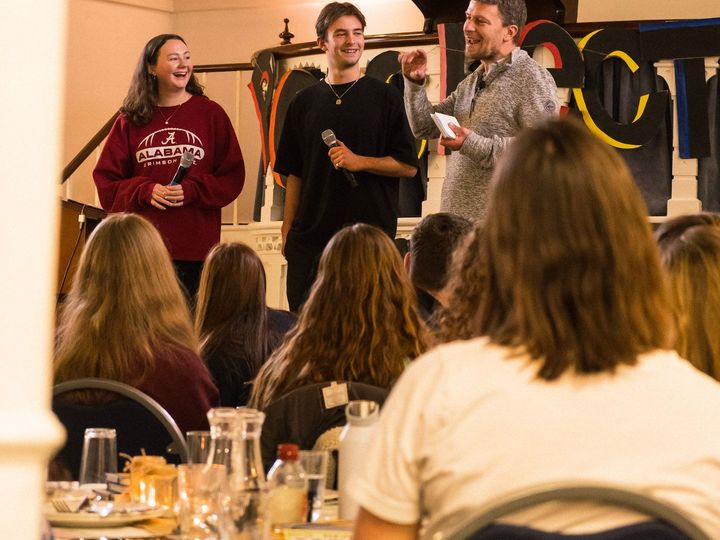
It is good to think clearly about what type of events will best serve the proclamation of the gospel.
Avoid events that would make it difficult to give time and attention to the talk. For instance — quiz nights, open mic nights, concerts, film showings etc. can all be good events… but are best to do before the Events Week begins. (See Making Use of One-off Events)
However, this does not mean your events have to be dull. It is quite possible to run events which are warm, creative and enjoyable… and which also faithfully communicate the gospel. See Using Creativity for more on this.
It is good to have a degree of continuity throughout the week — the same venue, time, length of talk and basic format. This encourages people to come to the whole series rather than to pick and choose which event they come to. Dramatically changing the content of the events (e.g. only serving a meal on one of the nights) can mean that CU members disproportionately invite their friends to only one event. Within the basic format you can still vary things to an extent, e.g. different food, different music, as well as, obviously, a different talk, etc.
There are certain key elements to consider:
Venue
- Create a relaxed atmosphere. This can be achieved by the way you set up the venue and the lighting. Sitting around tables works better than rows.
- Make sure that people can see the action! Placing chairs round just three sides of a table and positioning the tables end on to the stage ensures that no one has their back to the speaker during the talk (or gets a stiff neck!). Make sure the speaker is well illuminated.
- You will probably want to make sure that you have the ability to project images and words onto a screen, and a PA system.
- On each table there needs to be a sufficient number of feedback forms, gospels and pens for those seated.
- Consider setting up a bookstall in a position which is easily accessible.
Music
To create a café ‘feel’ it really helps to have music playing, from the moment people arrive, and, again, after the talk. This will help people relax as they arrive, but also encourage people to stay afterwards.
- Aim for secular music. Christian music will be unknown to most guests and may make them feel they are coming into an alien environment.
- While it is possible to just use pre-recorded music, it is good hospitality to play live music, if you can.
- It is important that people are able to chat (especially after the talk), so music should be of the sort that doesn’t require the audience to sit in silence! It’s good for the musicians to have been informed of this, so that they have the right expectations. It is not a concert, and they are not intended as the centre of attention. The exception to this is where music might be used around the talk to enhance it and help communicate the gospel. (See Using Creativity).
Food
Providing a meal means people don’t have to worry about going home to get food before they attend. Yet, as with lunch events, food is not just a way to encourage people to come — it creates a great atmosphere and embodies the gospel.
If you can’t provide a full meal, you could offer desserts or good quality drinks and snacks.
Preparing food yourselves is the cheapest option (and sometimes the nicest) but, depending on the venue, you may have to pay for professional catering, or only buy and distribute packaged food from a shop.
Having more food and drink available at the end of the talk encourages people to stay, and for conversations to continue. Consider having people waiting on the tables, offering food and drink, so that people don’t have to move.
Timing
Consider what time for the event would work best. If the event is not at the university there needs to be time for people to get there after lectures (and, if you are not serving dinner, to have something to eat first). If you are providing dinner and the event is close to the university then it may pay to start earlier before people have gone home.
Stewarding / Welcoming
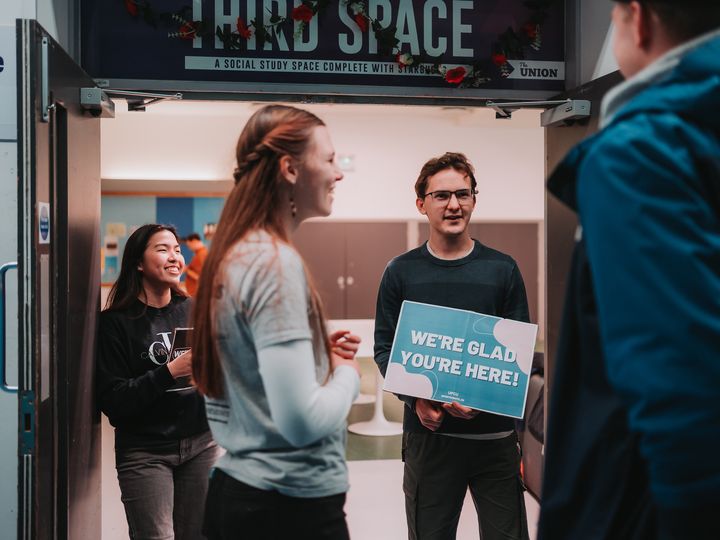
Stewards should welcome people at the door and encourage people to fill up the room from the front. If people arrive on their own, they can be introduced to others who they can sit with. They could also help direct CUGs to know where best to sit (CUGs won’t necessarily know who isn’t part of the CU).
See here for some good (and not so good!) examples of Evening Events.
This is a good example of a well-hosted evening event that used a variety of creative elements throughout the evening.